Laundry Care Symbols Explained: How to Wash Wool, Silk and Other Delicates at a Self-Serve Laundromat
Wondering how to wash silk, wool and other delicates at a self-serve laundromat? The basics are simple: read the laundry care symbols on the tag, zip the item into a mesh laundry bag, select the delicate cycle with cold water and finish on low heat or air dry. A few extra details, like the tips below, protect your favorites even more.
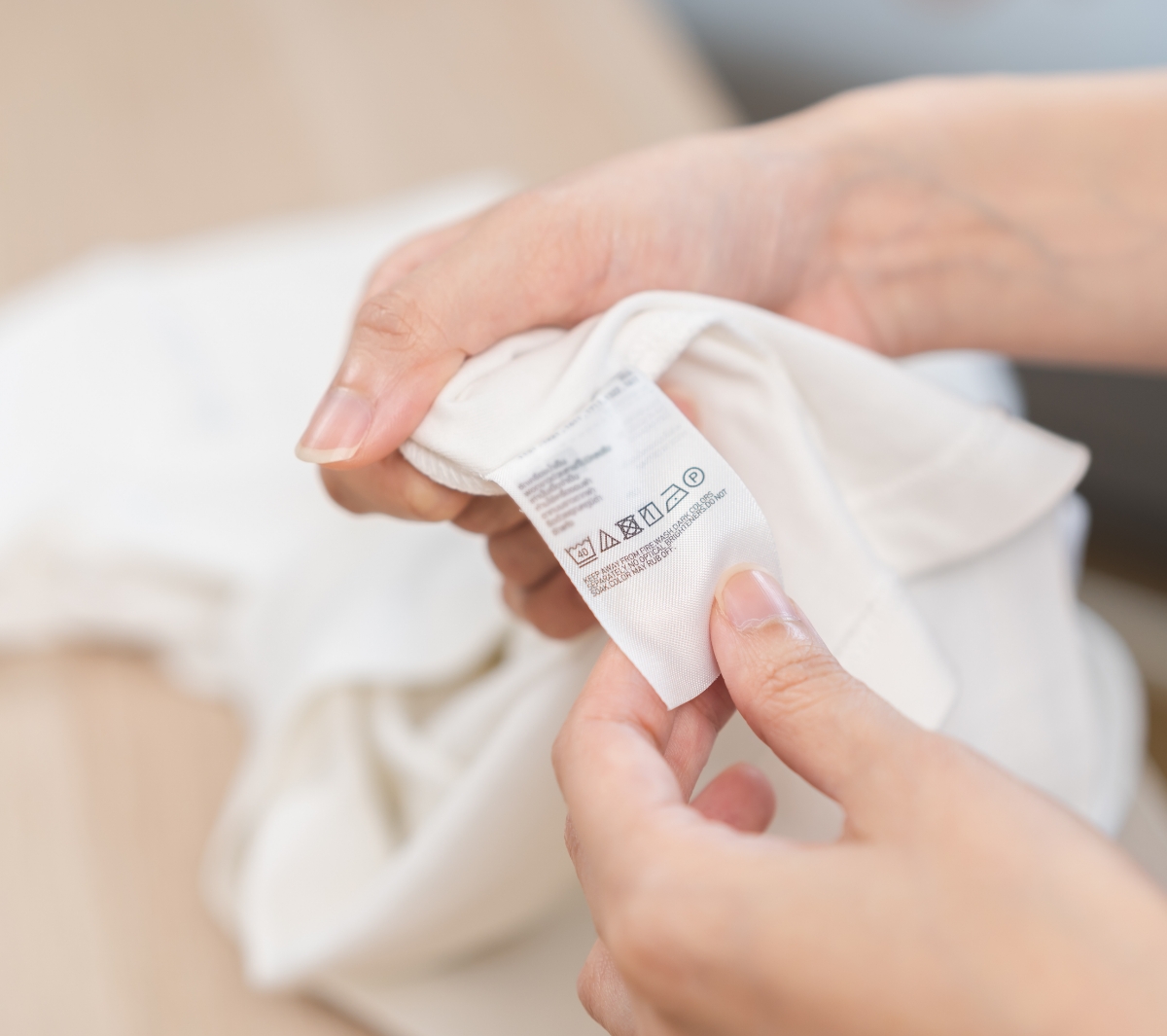
Still, most of us have a pile that never makes the trip: the good bras, the cashmere sweater, the blouse that cost more than the rest of the basket. One shrunken sleeve is enough to make the big machines feel like a gamble. The machines aren’t the problem. Skipping the tag is. Every care label uses five shapes, and once you know them, reading any tag takes only a few seconds.
Laundry Symbols Meaning: The 5 Shapes on Every Care Label
The Federal Trade Commission’s Care Labeling Rule requires most clothing sold in the U.S. to carry care instructions and allows the ASTM D5489 symbol system in place of words; the American Cleaning Institute publishes the consumer guide to those symbols. Learn the shape first, then the dots, lines and X’s that modify it:
- Washtub = wash.
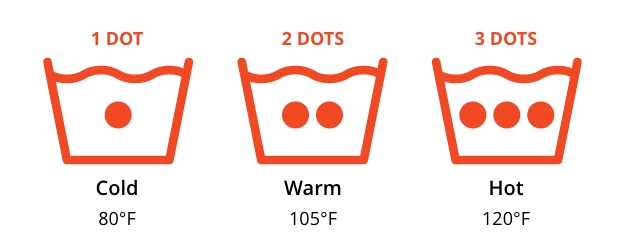
Dots set water temperature, per the American Cleaning Institute: one dot is cold (80°F), two is warm (105°F), three is hot (120°F).
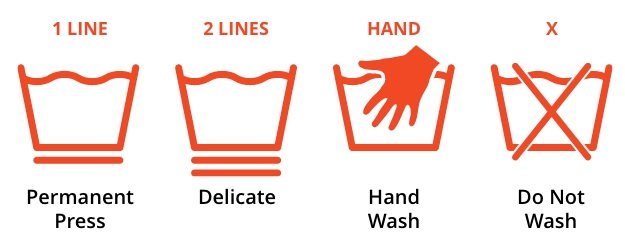
One line under the tub means permanent press; two lines mean the delicate cycle. A hand in the tub means hand wash. An X means do not wash.
- Triangle = chlorine only. An X means no bleach.
- Square = dry
-
- Square with a circle = tumble dry.
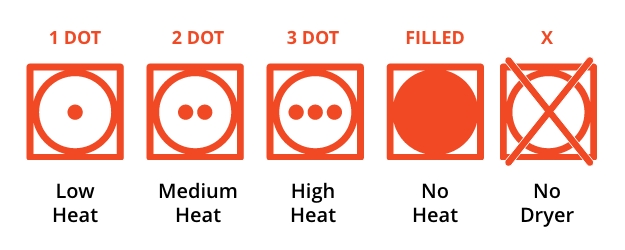
One dot is low heat, two medium, three high. A filled circle means no heat. An X means keep it out of the dryer.
-
- Square with lines = air dry.
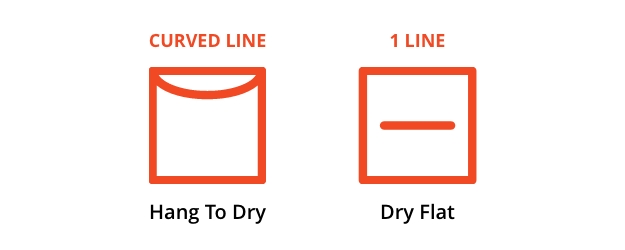
A curved line means hang to dry. One horizontal line means dry flat.
- Iron = ironing.
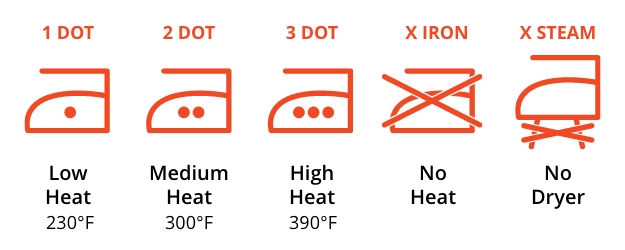
One dot is low heat (230°F), two is medium (300°F), three is high (390°F). Check the tag for your fabric’s setting. An X through the iron means don’t iron. An X through the steam lines below the iron means no steam.
- Circle = dry clean.
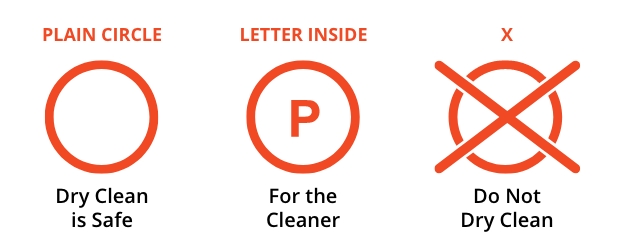
A plain circle means professional dry cleaning is a safe method. Letters inside are instructions for the cleaner. An X means do not dry clean. If the tag says “dry clean only,” treat that as a rule, especially for blazers and lined dresses.
Tags read left to right: wash, bleach, dry, iron and dry clean.
How to Wash Delicates at a Self-Service Laundry in 4 Steps
1. Zip fragile pieces into mesh laundry bags for delicates
Delicates include bras (underwire or wireless) and shapewear, lace, silk, rayon, wool and cashmere, swimwear, stretchy spandex leggings and anything with beading. If it can stretch, snag, shrink or pill (form tiny fuzz balls), it goes in a zippered mesh bag, away from the zippers and rivets in the rest of the load. Fasten hooks first and leave room in each bag so pieces can move.
“Small details like exposed Velcro or unzipped zippers can snag and damage an entire load—so a little extra care before washing and drying can go a long way,” says Michelle Ly, Retail Operations Manager at Speed Queen Laundry.
2. Choose cold water, the delicate cycle and a detergent for delicate clothes
Match the tag to the machine: two lines under the tub mean the delicate setting, one dot means cold.
- Look beyond the default cycle. Speed Queen Laundry’s wash tips recommend the delicate cycle for delicate garments because it’s gentler on clothing.
- Pick a washer with room to spare. Aim for a load that leaves plenty of room in the drum. Extra room means less rubbing and less pilling.
- Sort by color. Wash lights and darks separately so dye doesn’t transfer.
- Use a mild detergent for delicate clothes, measured to the load size on the bottle.
- Skip fabric softener on athletic wear, unless the tag says it’s OK.
3. Dry on low heat or air dry
Too much heat can shrink and stretch delicates for good. If the tumble dry symbol shows one dot, use the lowest heat and pull items while slightly damp.
According to Michelle Ly the secret to washing delicates at the laundromat is the heat setting. “Heat is the real damage driver, not the wash cycle. People obsess over picking ‘delicate’ wash settings, but it’s usually the dryer heat that shrinks garments, breaks down elastic and cracks prints,” she says. “Pairing a mesh garment bag (prevents snagging/underwire damage) with air-drying or a no-heat/low-heat tumble is the single habit that extends garment life the most. Most customers have never been told this; they think “gentle cycle” solves everything.”
Keep delicates in their mesh bag in the dryer and never mix them with towels. If the tag shows a square with a line, skip the dryer and take them home to hang dry or lay flat on a towel. Pick a dryer sized for the load, choose the right settings and don’t overfill it. If laundry isn’t dry after one cycle, customer service will restart it at no charge under the Speed Queen Laundry one-dry guarantee (bulky items like comforters are excluded; see store for details).
4. Read the dry clean symbol carefully
Manufacturers only have to list one safe way to clean a garment, so a tag with just a dry clean symbol doesn’t promise the item can also be washed. When in doubt, leave it to a professional.
Delicates Don’t Need a Special Trip
Read the five shapes, bag the fragile pieces, choose cold and delicate, dry low or take them home to air dry.
That’s the whole routine at a Speed Queen self-service laundry. Skip the coins and pay from the Speed Queen app, get a notification when the cycle ends and walk out with the whole hamper done, good sweater included.
Find a Speed Queen Laundry near you and bring the pieces you’ve been saving for later. Stores are designed to be clean, safe and friendly, and many offer attendants, free Wi-Fi, a kids’ play area and comfortable seating while you wait.
Deciphering Laundry Label Meanings: Three Common Questions
1. What if the care tag is missing or faded?
Treat it as a delicate, especially silk, lace, rayon, wool, cashmere and anything embroidered or beaded. Zip it in a mesh bag, run the delicate cycle on cold and air dry. For lined dresses and structured pieces like blazers, a professional cleaner is the safer call.
2. Can I wash a hand-wash-only item in a laundromat machine?
It depends on the tag. Hand wash is the method the maker tested, so machine washing carries some risk. If you try it, use the delicate cycle, a mesh bag, cold water and mild detergent, and skip the dryer.
3. Can I use fabric softener on delicates?
Usually, but check the care tag first. ACI notes softener can be used on delicates like wool and silk as long as the label allows it. It’s optional, so if the tag doesn’t mention it, a mild detergent for delicate clothes is all you need.